7 Things You Must Know About Sleep
Why Do We Slumber?
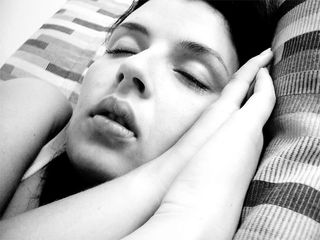
Humans spend virtually a 3rd of their lives asleep. Going without slumber will literally brand yous psychotic and, eventually, kill you. It'south clear that shut-eye is crucial to the body's ability to role.
But no one knows what sleep really does.
"It's sort of embarrassing," said Dr. Michael Halassa, a neuroscientist at New York University. "It's obvious why we demand to eat, for example, and reproduce … only information technology's not clear why we need to slumber at all." [v Surprising Sleep Discoveries]
We're vulnerable when we're asleep, so whatever sleep does, it must be worth the risk of the encephalon taking itself mostly offline. There are a few theories most why we sleep, and although none of them are totally solid, a few attempt to explain what happens each night, pulling in enquiry on topics ranging from cellular processes to cognition. Researchers say it does seem clear that slumber is key to the brain's power to reorganize itself — a feature called plasticity.
Sleep stages
It'southward not hard to show that slumber is important. Rats totally deprived of slumber dice within ii or three weeks, according to research by the pioneering Academy of Chicago sleep scientist Allan Rechtschaffen. No one has done similar experiments on humans, for obvious reasons, but a 2014 study published in The Journal of Neuroscience found that a mere 24 hours of sleep deprivation caused healthy people to take hallucinations and other schizophrenia-similar symptoms.
One reason it is difficult to become a handle on why we sleep is that slumber is actually pretty difficult to isolate and study. Sleep-deprivation studies are the most common fashion to written report sleep, said Marcos Frank, a neuroscientist at the Academy of Washington, but depriving an animal of slumber disrupts many of its biological systems. It'south hard to tell which outcomes are direct owing to slumber deprivation rather than, say, stress.
Some other reason sleep is hard to sympathize is that the encephalon may be doing two different things during the two major stages of slumber. As the nighttime wears on, sleepers bicycle through non-rapid middle motion (non-REM) and rapid-eye-motion (REM) sleep. Non-REM sleep is marked by slow brain waves called theta and delta waves. In dissimilarity, the encephalon's electrical activity during REM slumber looks much like it does when a person is awake, simply the muscles of the body are paralyzed. (If you've ever experienced sleep paralysis, it's because you woke from REM sleep before this paralysis ended.)
Studies have plant differences in the biology of the brain during these dissimilar stages. For example, during non-REM sleep, the body releases growth hormone, co-ordinate to a 2006 review of the biology of slumber published by Frank in the journal Reviews in the Neurosciences. Besides during non-REM sleep, the synthesis of some encephalon proteins increases, and some genes involved in protein synthesis become more active, the review found. During REM sleep, in dissimilarity, there does non appear to be whatsoever increase in this sort of protein-producing activity.
What do we know about slumber?
One determination that has emerged from sleep research is that slumber does appear to exist largely a brain-focused phenomenon, Frank said. Although slumber impecuniousness affects the immune system and alters hormone levels in the body, its most consistent impacts across animals are in the brain. [x Things You Didn't Know About the Brain]
"The primal nervous organisation is always impacted by sleep," Frank said. "In that location may have been other things that evolution added onto the primary office of sleep, but the primary function of sleep probably has something to do with the brain."
There is some testify, in fact, that slumber is just something that neurons do when they're joined in a network. Fifty-fifty neuron networks grown in lab dishes testify stages of activeness and inactivity that sort of resemble waking and sleeping, Frank said. That could mean slumber arises naturally when single neurons brainstorm to work together.
This could explain why even the simplest organisms show sleep-similar behaviors. Fifty-fifty Caenorhabditis elegans, a tiny worm with just 302 neurons, cycles through quiet, lethargic periods that wait similar sleep. Perchance the beginning unproblematic nervous systems to evolve exhibited these quiet periods, Frank said, and as brains got larger and more complex, the state of inactivity as well had to get more complicated.
"It would be very disadvantageous to accept a complex encephalon like ours where different parts are falling in and out of sleep, so you need to have some style to orchestrate this," he said.
What happens during slumber?
But the idea that sleep is a natural property of neuron networks doesn't really explain what's going on during sleep. On that front, scientists take a number of theories. One is that sleep restores the brain's free energy, co-ordinate to a 2016 review in the journal Sleep Medicine Reviews. During non-REM sleep, the encephalon consumes only almost half the glucose as information technology does when a person is awake. (Glucose is the sugar that cells burn upward to release energy.)
But if the idea that slumber restores encephalon free energy is true, the relationship between sleep and the brain's energy usage is non straightforward. For example, during slumber deprivation, the brain's breakdown of an energy source called glycogen increases in some parts of the brain only decreases in others. More than research is needed to sympathize this link. [The 7 Biggest Mysteries of the Homo Body]
Another thought is that slumber might enable the brain to clear out toxic products produced when nosotros're awake. The encephalon is a huge consumer of free energy, which means it also produces much waste matter. Some contempo research suggests that sleep is a time when the encephalon sweeps itself clean, Frank said, but those results demand to exist replicated.
"It might be something that kind of happens with sleep," Frank said, "but it may not be the most important matter slumber is doing."
Perhaps the most promising theory of slumber so far is that information technology plays a major office in the brain'south connectivity and plasticity. Plasticity is involved in learning and memory. Although information technology's unclear exactly how, plenty of evidence suggests that losing slumber can crusade bug with retentivity, particularly working memory, the process that allows people to hold information in an easily accessible style while working out a trouble. People who are slumber-deprived also struggle with choosing what to pay attentionto and regulating their emotions.
I way sleep may affect the brain's plasticity is through its effects on the synapses, or connections between neurons. Research has shown that when animals larn a new task, their neurons seem to strengthen the synaptic connections involved in learning that job during the side by side slumber cycle, according to the Sleep Medicine Reviews paper. In experiments where researchers put a patch over one of an animal's eyes, the brain circuits associated with visual data from that eye weakened within hours, according to research by the University of Surrey's Julie Seibt and colleagues. REM sleep, however, strengthened the circuits involving the other middle, suggesting that the encephalon uses sleep to adjust to changing inputs. [7 Weird Facts About Residual]
"It could even so hateful there is something actually bones and cardinal at the eye of [slumber], something basic that brain cells accept to exercise, and one issue is the plastic alter," Frank said.
In the time to come, a better understanding of slumber may come from research on cells called glia cells, Frank said. These brain cells, whose name literally means "glue," were once thought to exist largely inert but have been recently discovered to have a range of functions. Glia cells outnumber neurons by upward to 3 to ane, Frank said. Glia cells may control the flow of cerebrospinal fluid throughout the brain, which could result in immigration out metabolic waste matter during slumber, for example.
"It could be that the mystery of sleep could be solved by understanding what these very specialized glia cells are doing," Frank said.
Original article on Live Science.

Stephanie Pappas is a contributing writer for Live Science, covering topics ranging from geoscience to archeology to the homo brain and behavior. She was previously a senior writer for Live Science but is at present a freelancer based in Denver, Colorado, and regularly contributes to Scientific American and The Monitor, the monthly mag of the American Psychological Association. Stephanie received a bachelor'due south degree in psychology from the University of South Carolina and a graduate certificate in science communication from the Academy of California, Santa Cruz.
Source: https://www.livescience.com/32469-why-do-we-sleep.html

Post a Comment for "7 Things You Must Know About Sleep"